
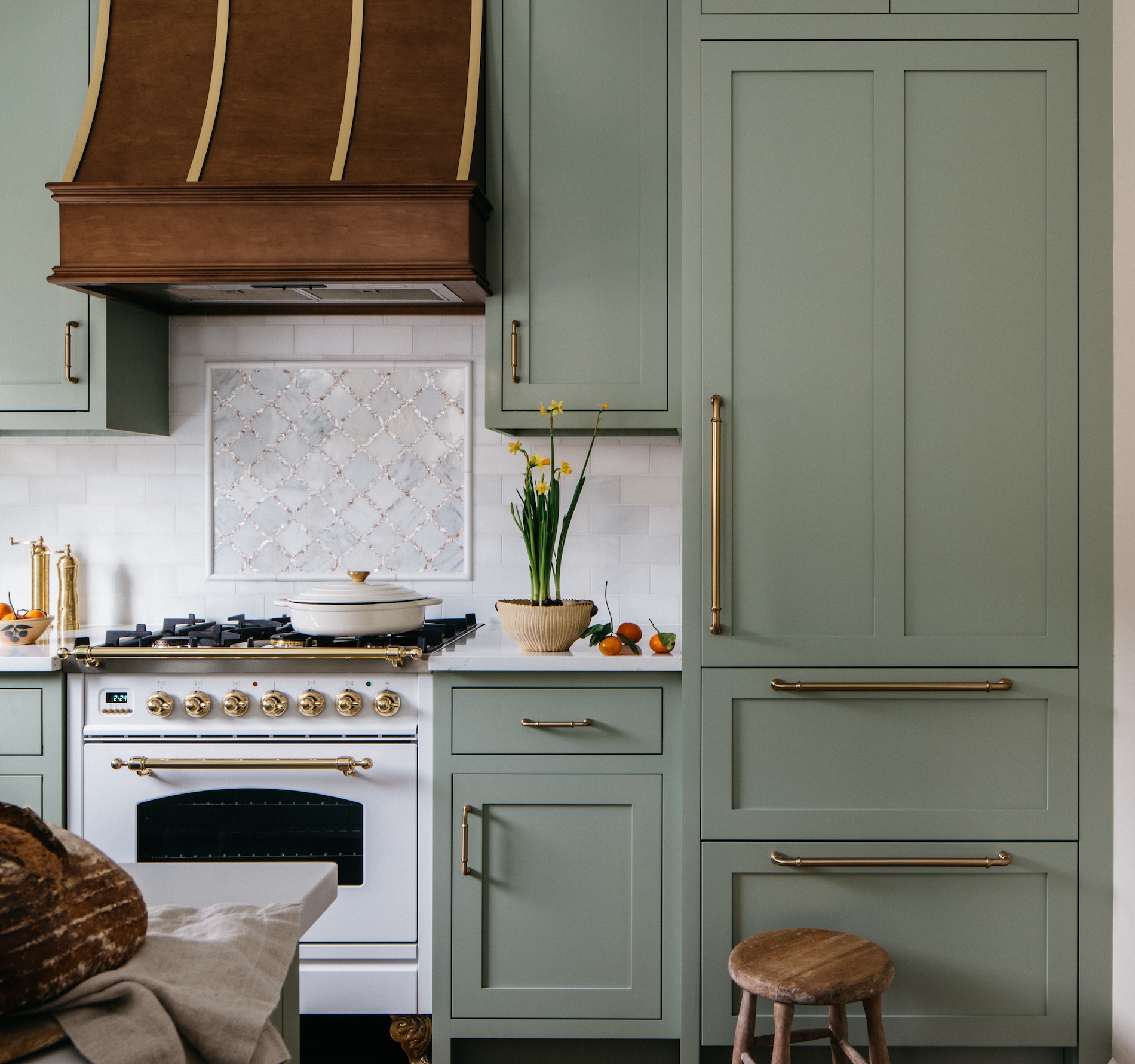
There’s a certain kind of kitchen that just feels good.
It’s often beautifully designed, of course, but what really makes the difference is what’s happening behind the scenes. Thoughtful layouts, easy access to ingredients, dishwashers where you actually need them, and smartly placed appliances make cooking feel calm instead of chaotic.
Which brings me to three of my favorite words: integrated appliance panels. They’re sleek, incredibly practical, and once you’ve lived with them, it’s hard to imagine going back.
Appliance panels allow refrigerators, dishwashers, and other hard-working essentials to disappear into the surrounding cabinetry, creating a kitchen that feels cohesive and custom rather than broken up by giant stainless-steel blocks. It all comes down to a philosophy of designing around your lifestyle, instead of forcing daily life to work around appliances.
Up next, I’m breaking down how to design with integrated appliance panels—what matters most, what often gets overlooked, and how to avoid costly mistakes. By the end, you’ll have a behind-the-scenes perspective on whether they’re right for you, and how to get them right.
What Goes Into a Perfect Fit
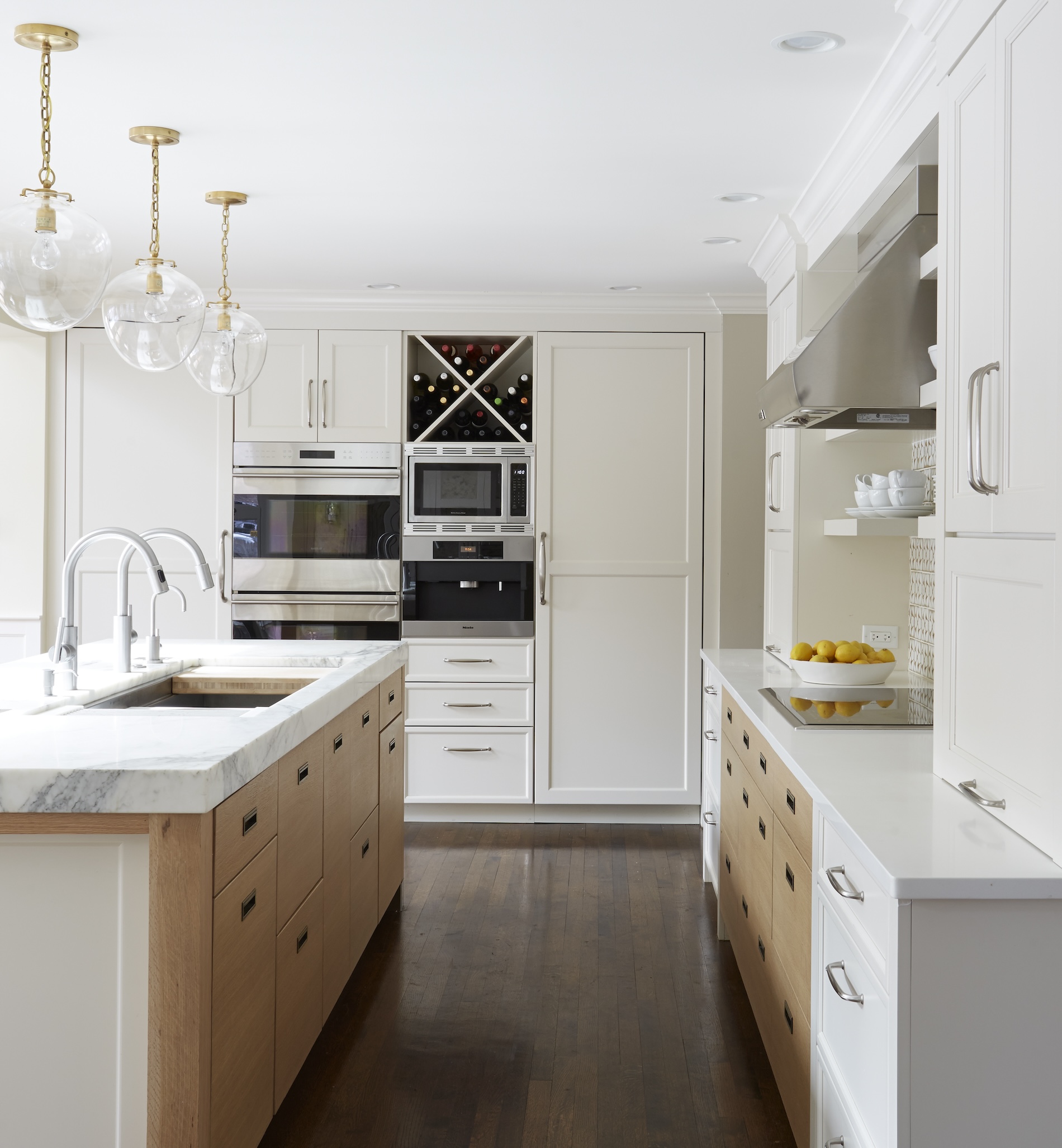
Planning is crucial. When we work with appliance panels at TKS, we start by verifying exact appliance specifications and confirming real, on-site measurements—including finished walls, floor heights, and cabinet depths—before anything else happens. Door swing, ventilation, and service access should always be considered early on.
Panel thickness and weight matter more than most people realize. Hardware needs to support daily use without sagging or stressing the appliance over time. Clean, consistent reveals don’t happen by accident either. They’re the result of coordination, patience, and a lot of checking and rechecking long before installation day arrives.
Where Things Go Wrong
Let’s say you go rogue on pre-measuring and opt for a prefabricated panel. What’s the worst that could happen? Spoiler: a clunky, awkward result, and money down the drain. Appliances may protrude past the cabinetry because the wrong depths were selected. Door swings collide with islands or adjacent cabinets. Ventilation requirements get overlooked, leading to overheating or noisy operation.
Panels can also end up too thick or too heavy for the appliance hardware, which affects durability over time. In the worst cases, cabinetry or appliances need to be reordered entirely because the original selections weren’t truly panel-ready.
Most of these issues are preventable with proper planning upfront.
Why Cabinetmakers and Appliance Specs Need to Be in Sync
After decades in the business, we’ve learned that successful appliance panels come down to collaboration. Full specification sheets should be shared across all trades early, and final model numbers must be confirmed before cabinetry fabrication begins.
It’s important to review cutout dimensions, hinge requirements, ventilation notes, panel thickness, and attachment methods together so cabinet doors are properly reinforced and operate smoothly for years to come.
Throughout the process, we cross-check measurements and keep communication open between the cabinet shop and appliance vendor. This level of coordination protects both the cabinetry and the appliance, while preserving the clean, integrated look homeowners love.
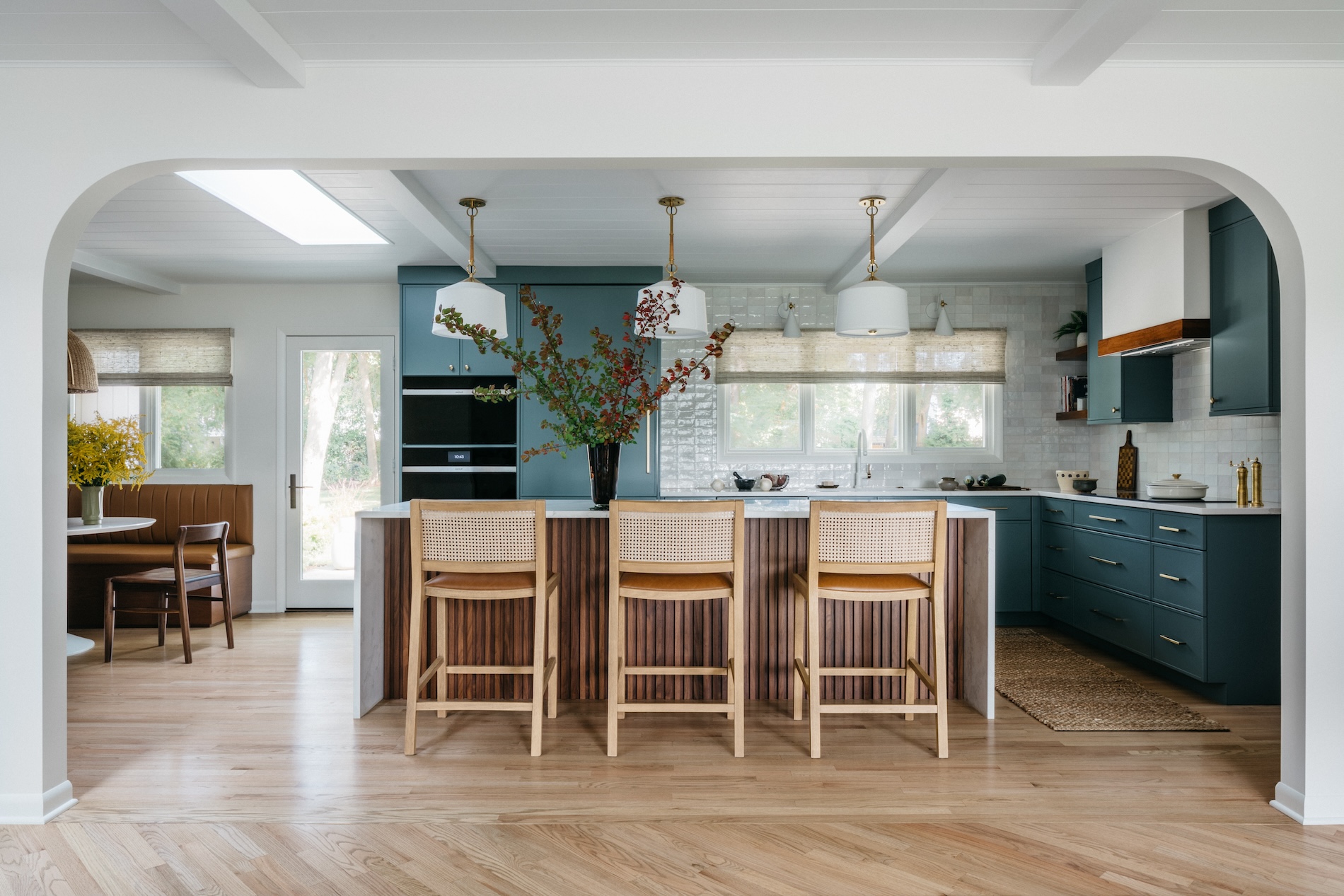
Because accurate documentation is so critical, we often gravitate toward Sub-Zero and Wolf for panel-ready appliances. Their trade-focused tools and detailed specifications make it easier to align appliances, cabinetry, and installation requirements from the start.
Do Appliance Panels Actually Help With Resale?
From a resale standpoint, appliance panels consistently make kitchens feel more custom and move-in ready. Realtors often note that integrated kitchens photograph better and stand out in listings, which matters enormously in today’s market. Past clients frequently tell us buyers notice the kitchen immediately, even if they can’t quite articulate why it feels elevated.
Panels alone won’t set the asking price, but they do elevate the overall impression of the home and help it show better, which can influence how quickly it sells.
When Appliance Panels Are Worth It and When They’re Not
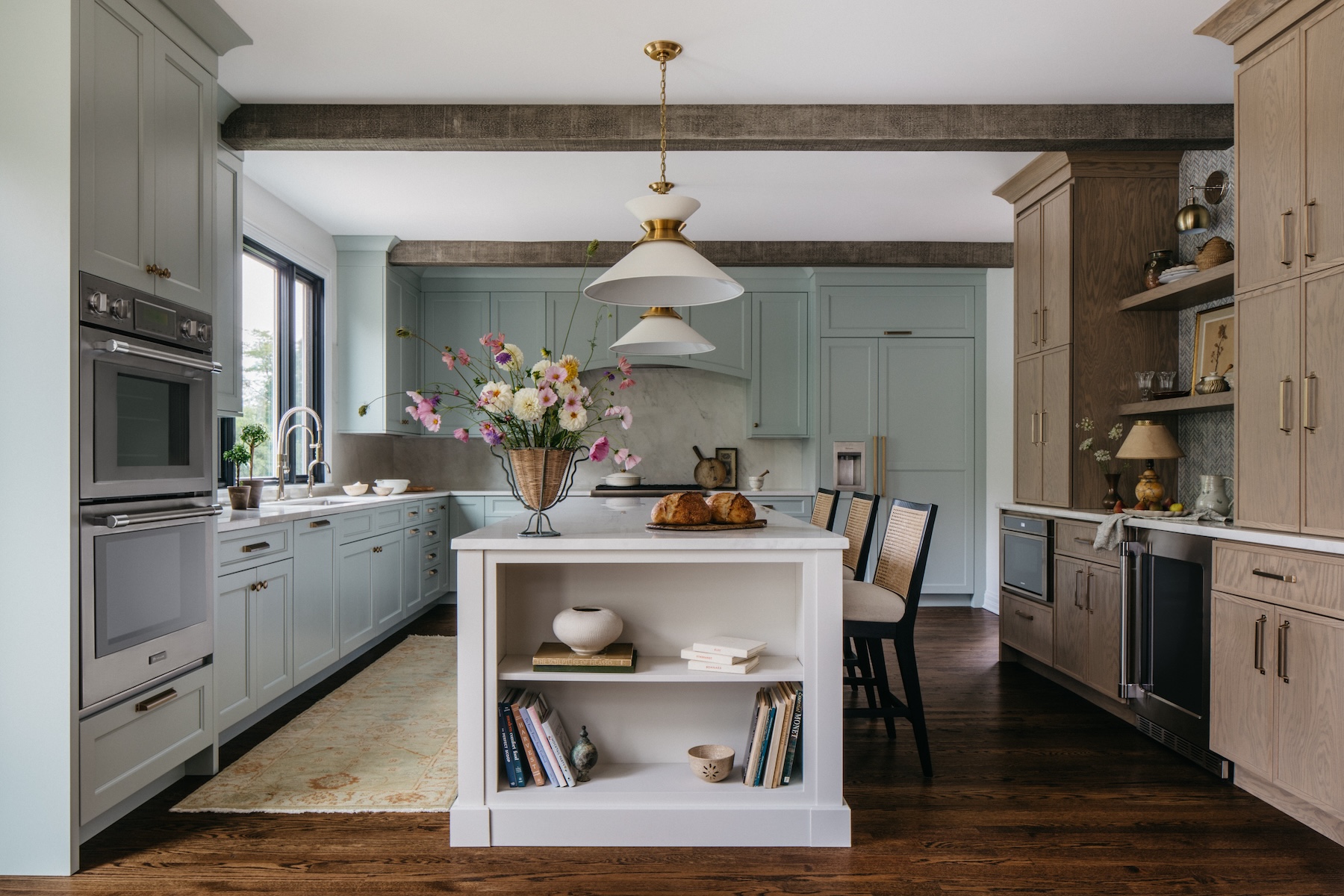
Whether appliance panels are worth the investment comes down to intention. They tend to make the most sense in open-concept homes, smaller kitchens where visual continuity matters, or projects aiming for a clean, fully integrated look. They’re also a strong choice when premium cabinetry is part of the plan.
They’re less essential in secondary spaces like basements or butler’s pantries, or when budget priorities lean toward appliance performance over aesthetics. In those cases, a thoughtful mix of stainless and panel-ready appliances can work beautifully.
Real Life, Made Easier
Integrated appliance panels quietly improve everyday living. Families appreciate fewer visible fingerprints. Pet owners like the reduced gaps and protrusions that collect fur and dust. Entertainers enjoy a kitchen that feels polished even mid-gathering. Downsizers and small-space homeowners benefit from a calmer, less visually crowded room.
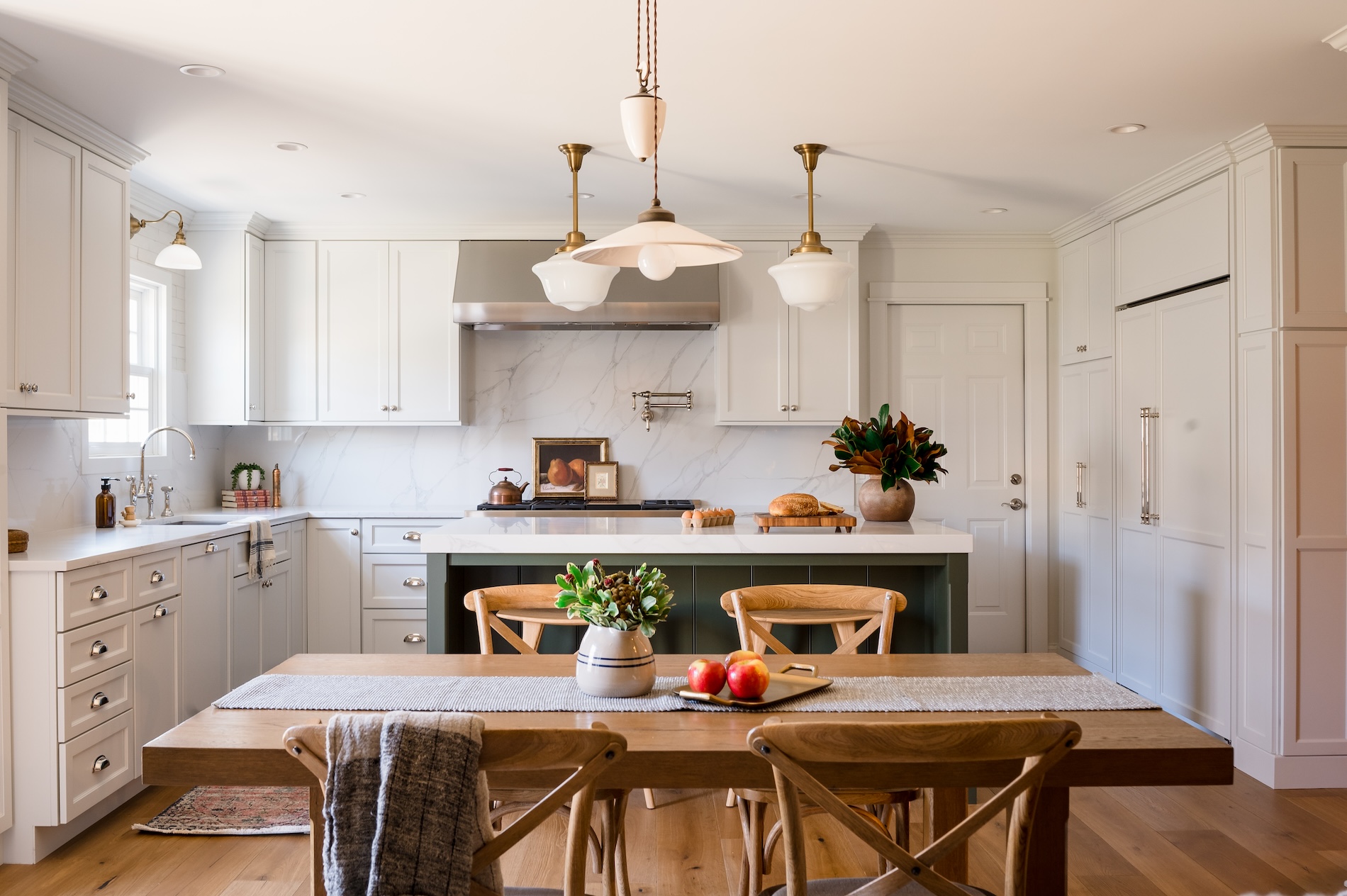
At the end of the day, there’s a difference between a kitchen that’s beautifully staged and one that’s fully considered. Appliance panels live right at that intersection of form and function. When planned well, they support how you live, age gracefully, and create visual calm—without drawing too much attention.
Curious how integrated appliance panels could level up your kitchen? We’ve got plenty of ideas—let’s talk.
Related Posts


No Comment
Leave a Comment
CHOOSE A LOCATION
4501 Tamiami Trail N, Ste 424
Naples, FL 34103
(239) 378-6599
contact@tksdesigngroup.com
522 Crescent Blvd
Glen Ellyn, IL 60137
(630) 858-4848
contact@tksdesigngroup.com
1040 Roscoe St.
Chicago, IL 60657
(630) 488-7481
contact@tksdesigngroup.com