
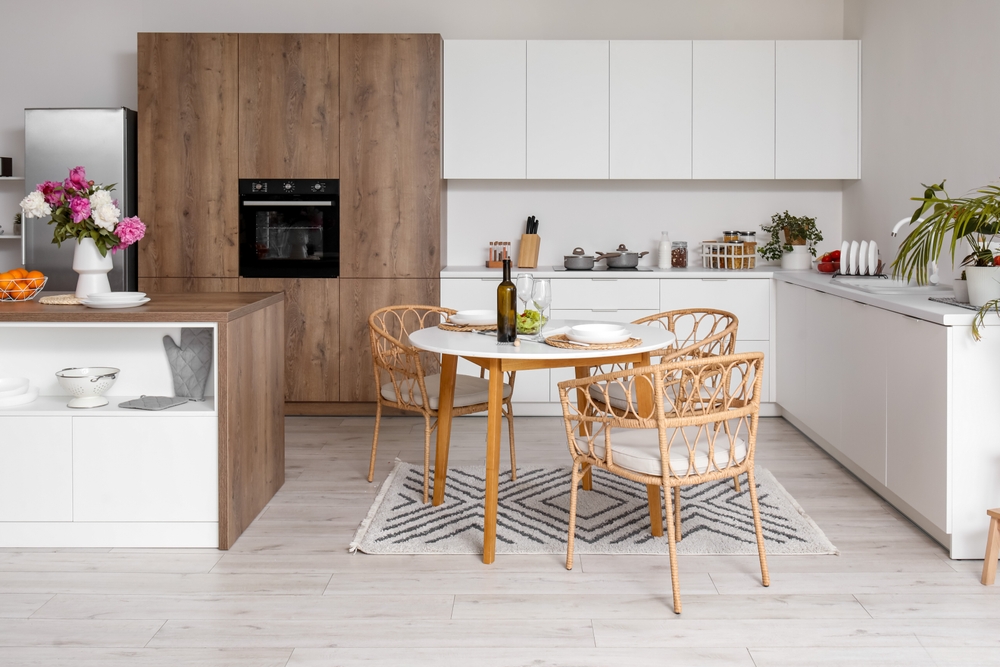
A home can be beautiful and still make entertaining feel harder than it should. Guests gather in the kitchen because there is nowhere else to settle, drinks end up on whatever surface is closest, and the host spends the evening moving between rooms that never quite work together.
For homeowners working with interior designers in Chicago, the better starting point is to think about how people arrive, gather, eat, and linger before making decisions about layouts, furnishings, or finishes. The way you host should shape the home from the beginning.
How do you design a home around the way you entertain?

Designing for entertaining starts with understanding what hosting actually looks like in your home.
Some people prefer long dinners with a small group. Others regularly fill the house with family and friends. Some evenings revolve around the kitchen island, while others call for a dining room that feels ready for the occasion.
The home should respond to those habits. There is no single entertaining layout that works for everyone.
1. Start with how guests move through the home
The experience begins before anyone sits down. A clear entry, somewhere natural to leave a coat or bag, and an easy path into the main gathering spaces help the evening settle into place. When guests have to cross private rooms, squeeze through narrow transitions, or guess where to go next, the home immediately feels less comfortable.
A good flow does not always require opening every room. Sometimes a well-placed doorway, a stronger visual connection, or a more thoughtful furniture arrangement is enough.
In an older property, that may mean finding a way to update the home without losing the character that makes it distinctive.
2. Give people more than one place to gather
Most gatherings naturally divide into smaller groups.
Some guests stay near the kitchen. Others settle into a quieter conversation, move toward the fire, or find a place where children can play without taking over the room. A home designed for hosting gives those moments somewhere to happen.
That might include:
- An island with comfortable seating
- A bar or beverage station away from the prep area
- A dining room that feels inviting beyond formal occasions
- A sitting area that supports conversation
- Outdoor spaces that connect naturally to the interior
The point is not to create more rooms, but to give the rooms you already have clearer roles.
3. Let the kitchen support the host
The kitchen often becomes the center of the evening, even when it was never designed for it.
If guests gather there, the layout should allow the host to keep cooking without constantly asking people to move. Clear work zones, enough landing space, and a place for drinks or appetizers outside the main prep area can make a noticeable difference.
A pantry, scullery, or secondary serving area can also keep cleanup, extra dishes, and preparation out of sight.
These decisions work best when they grow from one larger vision for the renovation instead of a series of isolated choices.
4. Think about comfort as carefully as appearance
A room can look striking and still leave guests restless. Chairs need to hold up through a long conversation, tables need room to breathe around them, and lighting should ease as the evening wears on.
Upholstery, rugs, and the right window treatments can make a larger room feel warmer, quieter, and more settled. Even the small things matter, like somewhere to set down a glass, a flattering light, or seating arranged so people can face each other instead of talking past a coffee table.
5. Plan for what happens behind the scenes
Hosting involves more than the rooms guests can see. Serving pieces and linens need to be stored somewhere, while food, flowers, drinks, coats, and cleanup all create clutter that has to go somewhere during the evening. Without a place for those things, the host ends up managing them all night instead of enjoying the party.
Custom cabinetry, a well-planned pantry, a mudroom, or discreet storage near the dining area can keep the visible rooms looking composed no matter what’s happening behind them. This is why it’s smart to think about storage while the design is still being worked out, rather than trying to fit it in once everything else is decided.
6. Make room for your own hosting style
A home designed for entertaining should still feel personal when no one else is there.
A family that hosts Sunday dinners will need something different from a couple who prefers cocktails and smaller gatherings. The right design reflects those distinctions through layout, lighting, furnishings, and the quieter details that make the home feel unmistakably yours.
Where can I find experienced interior designers in Chicago?

TKS Design Group helps homeowners create spaces that feel just as natural during a quiet weeknight as they do when the house is full. As an award-winning, family-owned design-build firm with more than two decades of experience, our team plans every detail around the way you live, gather, and entertain.
From projects near the Museum of Contemporary Art Chicago to homes across the city, we guide the work from concept through construction, sourcing, furnishings, and installation. Bring us the way you love to host, and we’ll shape the home around it!
Related Posts


No Comment
Leave a Comment
CHOOSE A LOCATION
4501 Tamiami Trail N, Ste 424
Naples, FL 34103
(239) 378-6599
contact@tksdesigngroup.com
522 Crescent Blvd
Glen Ellyn, IL 60137
(630) 858-4848
contact@tksdesigngroup.com
1040 Roscoe St.
Chicago, IL 60657
(630) 488-7481
contact@tksdesigngroup.com