
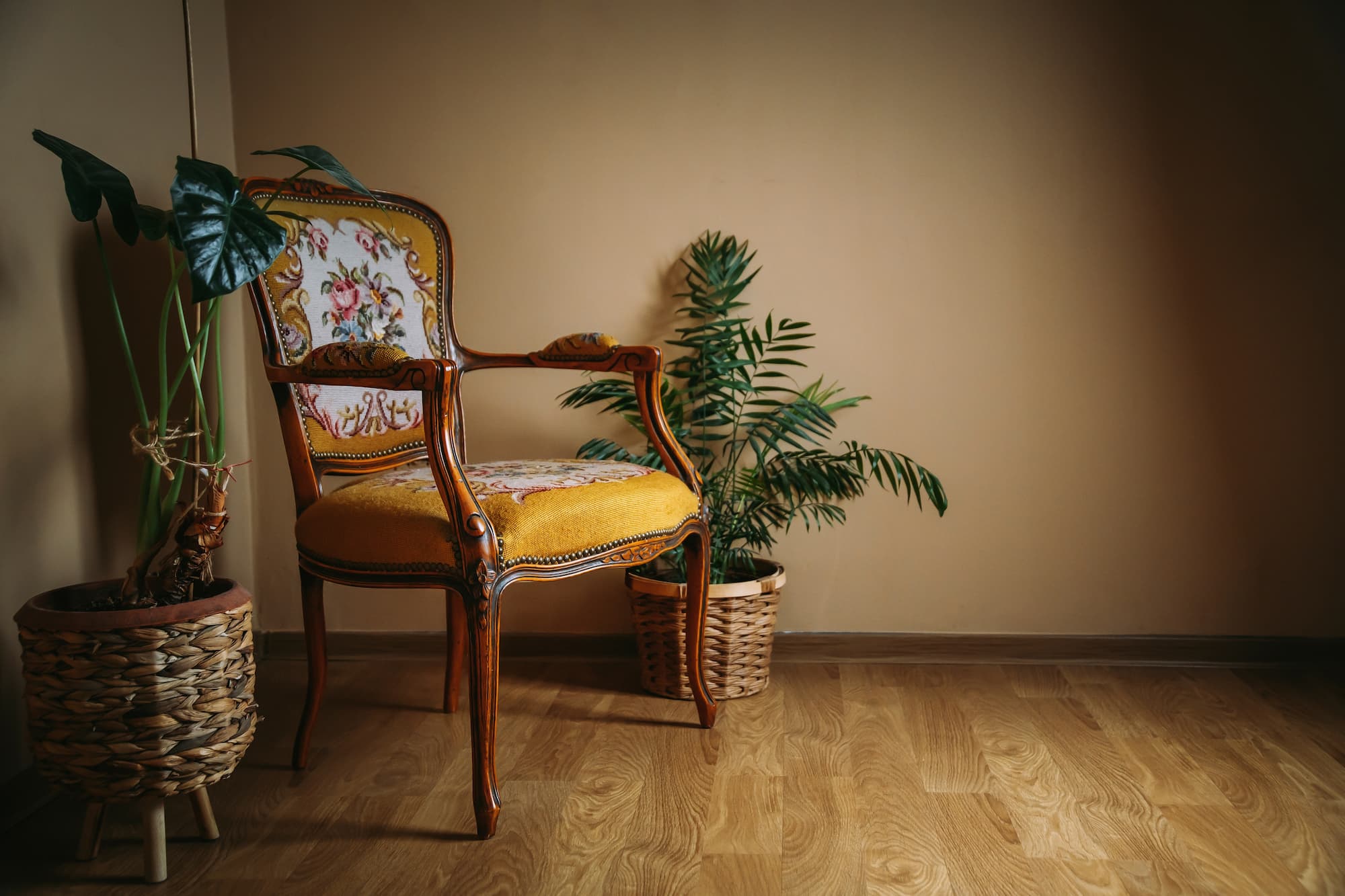
Maybe it’s your grandmother’s walnut secretary or a farmhouse table that’s hosted decades of holiday dinners. Whatever the piece, you already know it’s staying. The tricky part is everything around it. A room planned without the piece in mind can make it look stranded, while a room built entirely around it can start to feel like a museum exhibit.
Finding that middle ground is one of the most personal parts of home decorating in the Western Suburbs, and it usually starts with studying the piece itself. Today, we’ll take a look at how to give a cherished antique the right setting and how to blend it with furniture from other eras. Join us as we explore the options!
How do you decorate around an antique?
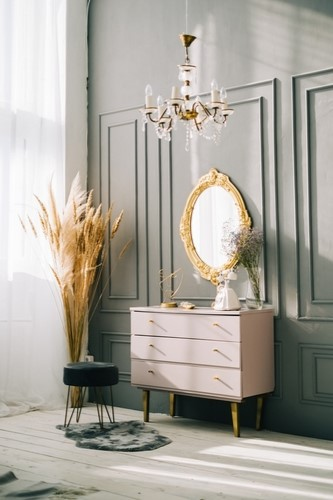
Start by treating the antique as the room’s anchor. Decide where it goes first, then let its scale and wood tone guide the choices that follow. Most rooms come together the other way around, with a sofa and rug chosen first and the special piece squeezed in wherever it fits. Reversing that order gives the antique a real role in the room.
Choose its spot first
A tall piece like a secretary or china cabinet usually reads best on a wall you see as you walk in, while a smaller table can ground a reading corner or entry. Think about daily use as well. Designers ask about the small daily habits that decide placement for good reason: an heirloom desk that turns into the household charging station will collect cords and scratches.
Wood also reacts to its surroundings. Keeping an antique away from sunlight and vents protects the finish from fading and the wood from humidity swings that can split boards or loosen veneer.
Pull your palette from the piece
Look closely at the antique and borrow from it:
- Wood tone: Cherry and mahogany lean warm and red, while weathered or limed oak reads cooler. Echo that warmth or coolness in paint and fabric so the rest of the room doesn’t fight it.
- Hardware: Aged brass pulls or bronze hinges can guide your choice of lamp bases or a mirror frame.
- Existing color: A worn painted finish or an old needlepoint seat often holds a muted green or faded blue you can repeat in pillows or a rug.
- Carving and inlay: Fine detail pairs well with small-scale patterns, which add interest without competing.
Matching these details can be hard with off-the-shelf options. A designer can work with fabrics and finishes most stores never carry, which helps when you’re chasing a specific patina.
Give it room to breathe
An antique gets lost when it shares a wall with several other statement pieces. Leave open space around it and keep nearby furniture simpler in shape. Lighting helps, too, since a lamp angled across a carved surface brings out detail that flat overhead light hides.
How to mix antiques with modern decor?
Give the old and new pieces something in common, then let everything else contrast. A carved walnut chest beside a clean-lined sofa looks intentional when the two share a wood tone or a curve. Without that link, the antique can seem like it wandered in from another house. Soft, rounded contemporary shapes also tend to sit more easily beside antiques than sharp, high-gloss ones.
Find a thread that ties the eras together

- Repeat a material. If the antique is walnut, bring a similar warm wood into a modern side table or picture frame.
- Echo a silhouette. The curve of a cabriole leg can reappear in a rounded sofa arm or an arched mirror.
- Pick a dominant era. Many designers favor a room that’s mostly one period with a few pieces from another, since an even split can feel undecided.
- Give the piece company. One antique alone can look orphaned, while a vintage lamp or older artwork nearby suggests the room came together over time.
Update it without erasing its history
Some antiques need small changes to work in a modern room. A dining chair might get new upholstery in a contemporary fabric, or an old lamp might be rewired by a professional. Before refinishing or altering anything valuable, have it appraised, since stripping an original finish can lower its worth.
Comfort counts, too. Antique seating can be firmer and more fragile than newer chairs, so keep supportive seating nearby that’s easy to rise from, especially if you’re planning a room that adapts as you age.
Who can help me with home decorating in the Western Suburbs?
TKS Design Group can, though we’ll want a proper introduction to your heirloom first, right in the room where it lives. Photos rarely capture how a walnut finish warms in afternoon light or how much presence a tall cabinet has on a wall. Once we understand it, we build the furnishings plan around it, layering soft contemporary shapes and muted, nature-inspired color until the room feels like it was always meant for that piece.
Our award-winning team then sources through trusted trade resources and manages every order through installation. We’re glad to make the trip, whether it’s for a farmhouse table in Naperville or a secretary desk a few minutes from Cantigny Park. Schedule a consultation, and come ready to tell us its story.
Related Posts

No Comment
Leave a Comment
CHOOSE A LOCATION
4501 Tamiami Trail N, Ste 424
Naples, FL 34103
(239) 378-6599
contact@tksdesigngroup.com
522 Crescent Blvd
Glen Ellyn, IL 60137
(630) 858-4848
contact@tksdesigngroup.com
1040 Roscoe St.
Chicago, IL 60657
(630) 488-7481
contact@tksdesigngroup.com